

01Planning + visualization
Design
Property analysis, layout, pool configuration, and visualization.
From custom pool fabrication to complete installation, we design around your property, your vision and your budget — and manage the project from start to finish.
Property analysis, layout, pool configuration, and visualization.
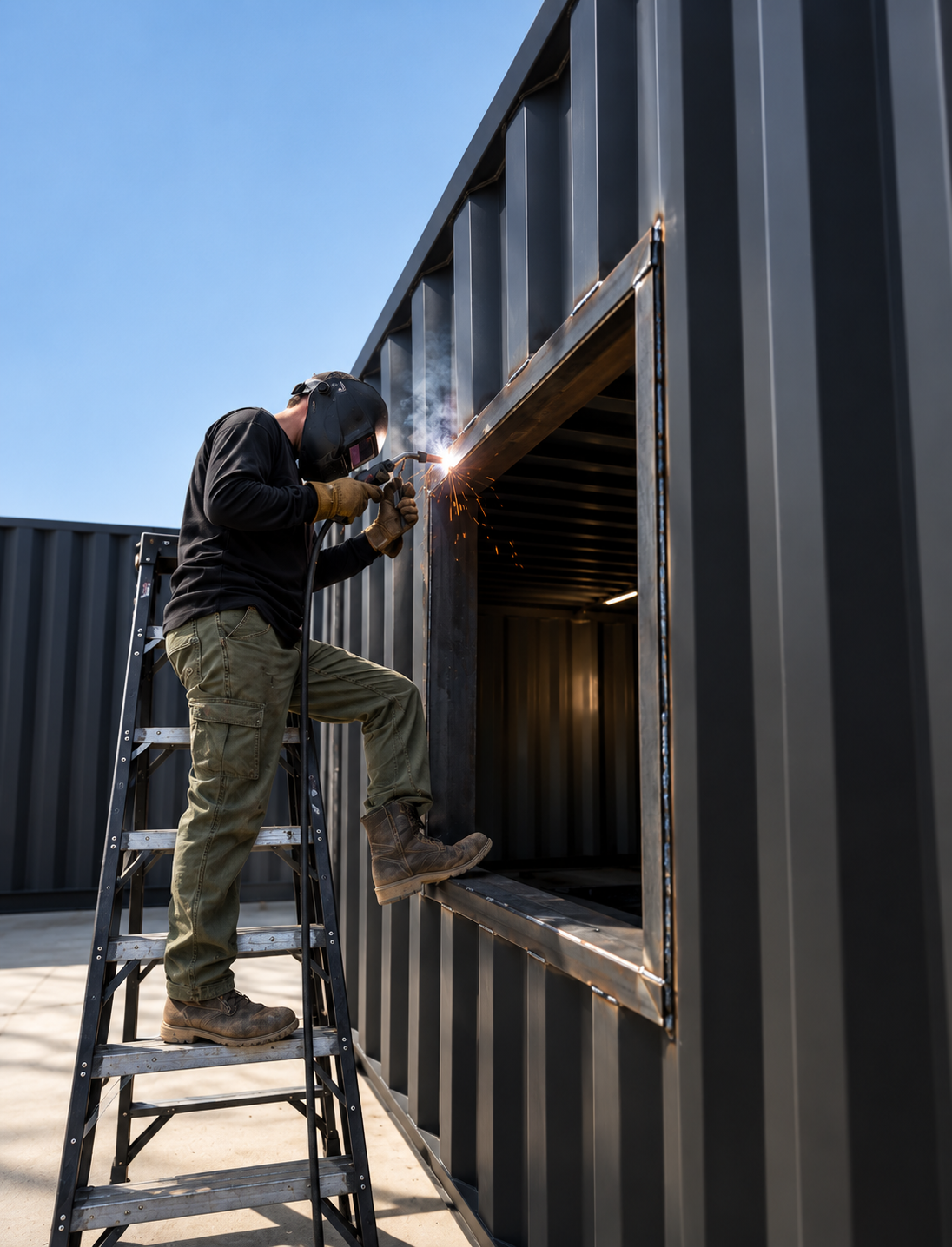
Steel structure, stairs, benches, spa, windows, finishes, plumbing, and equipment built to your spec.
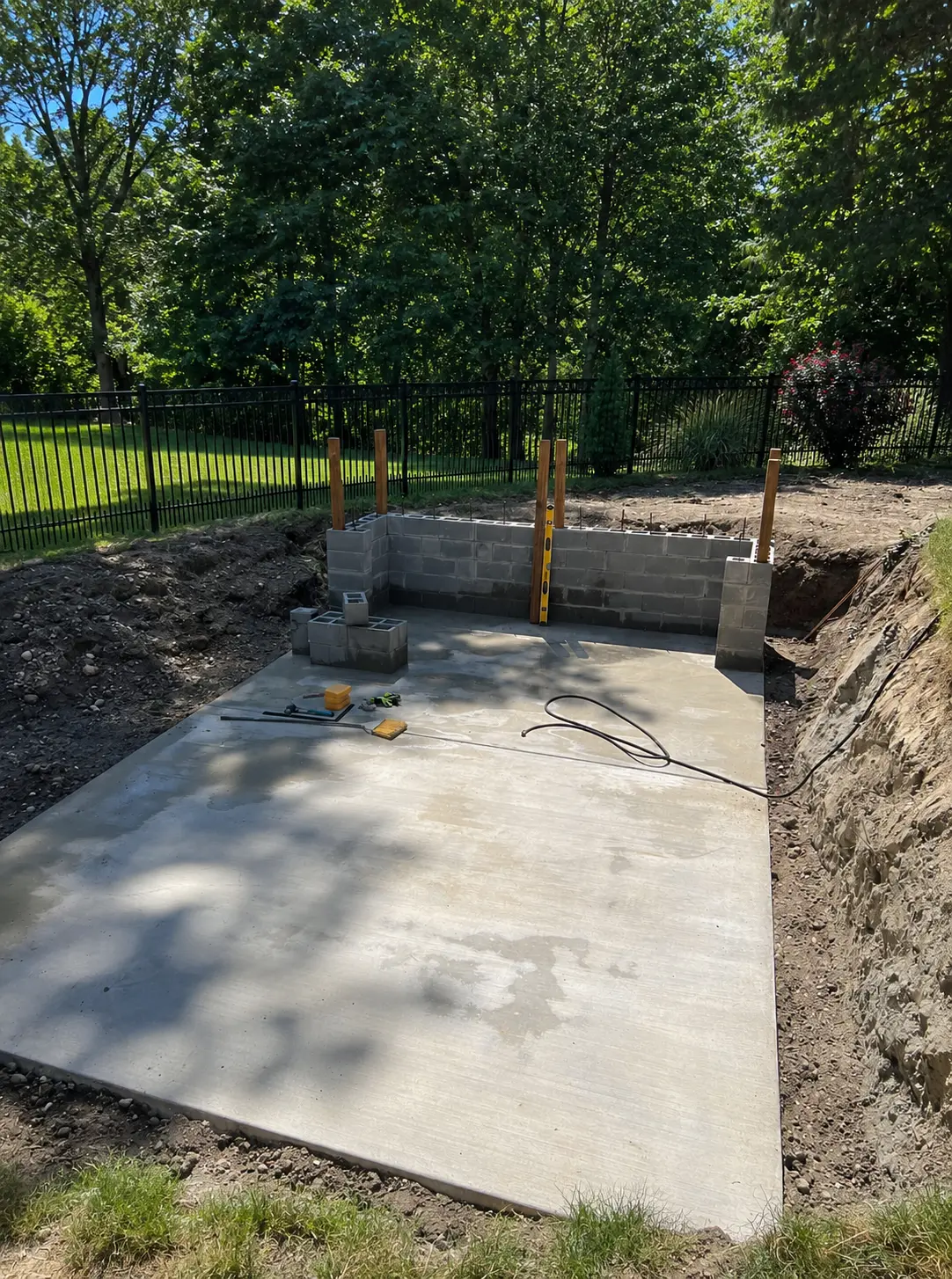
Excavation, grading, drainage, foundation, utility runs, and crane access.
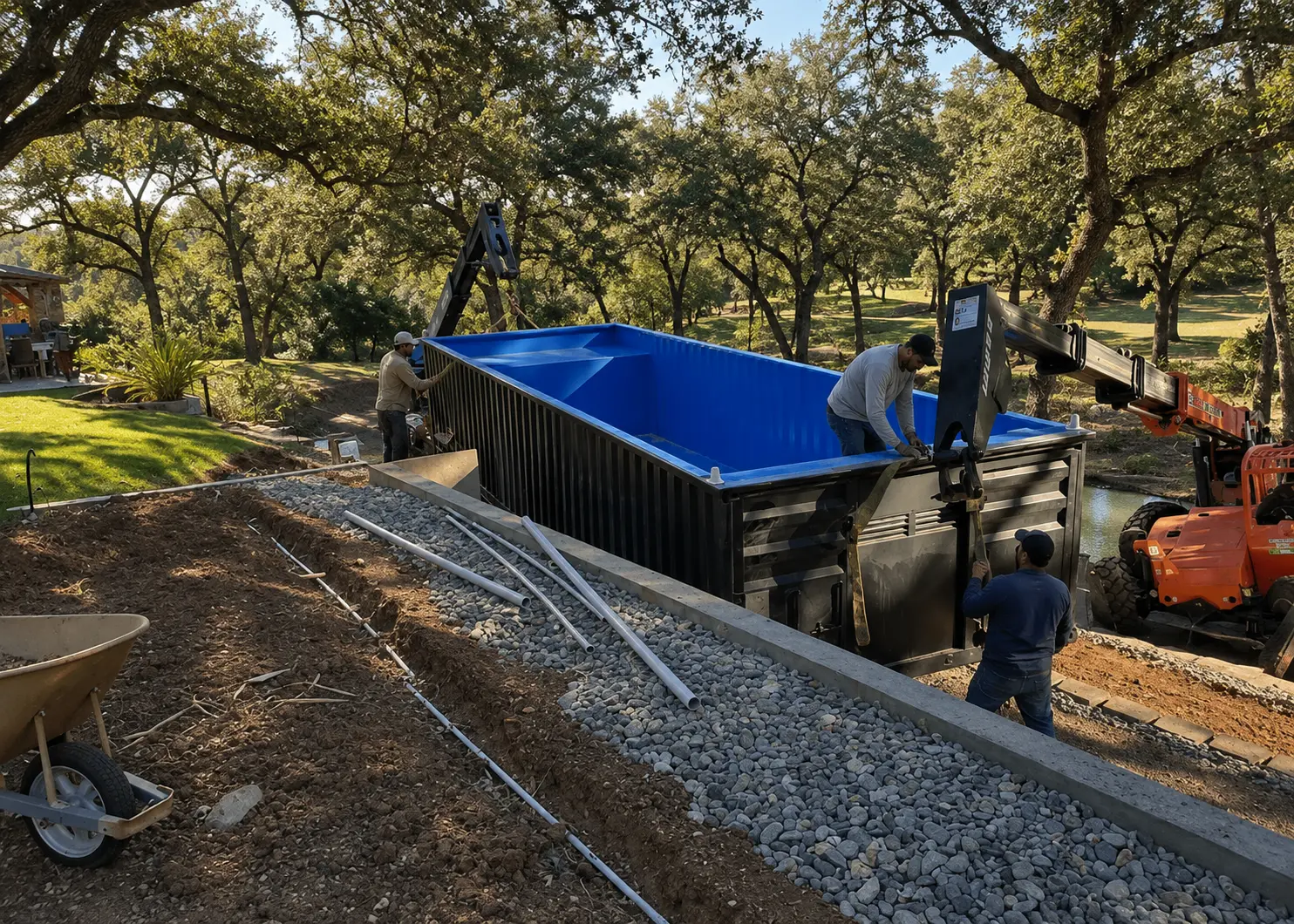
Transport, crane set, leveling, connections, startup, and commissioning.
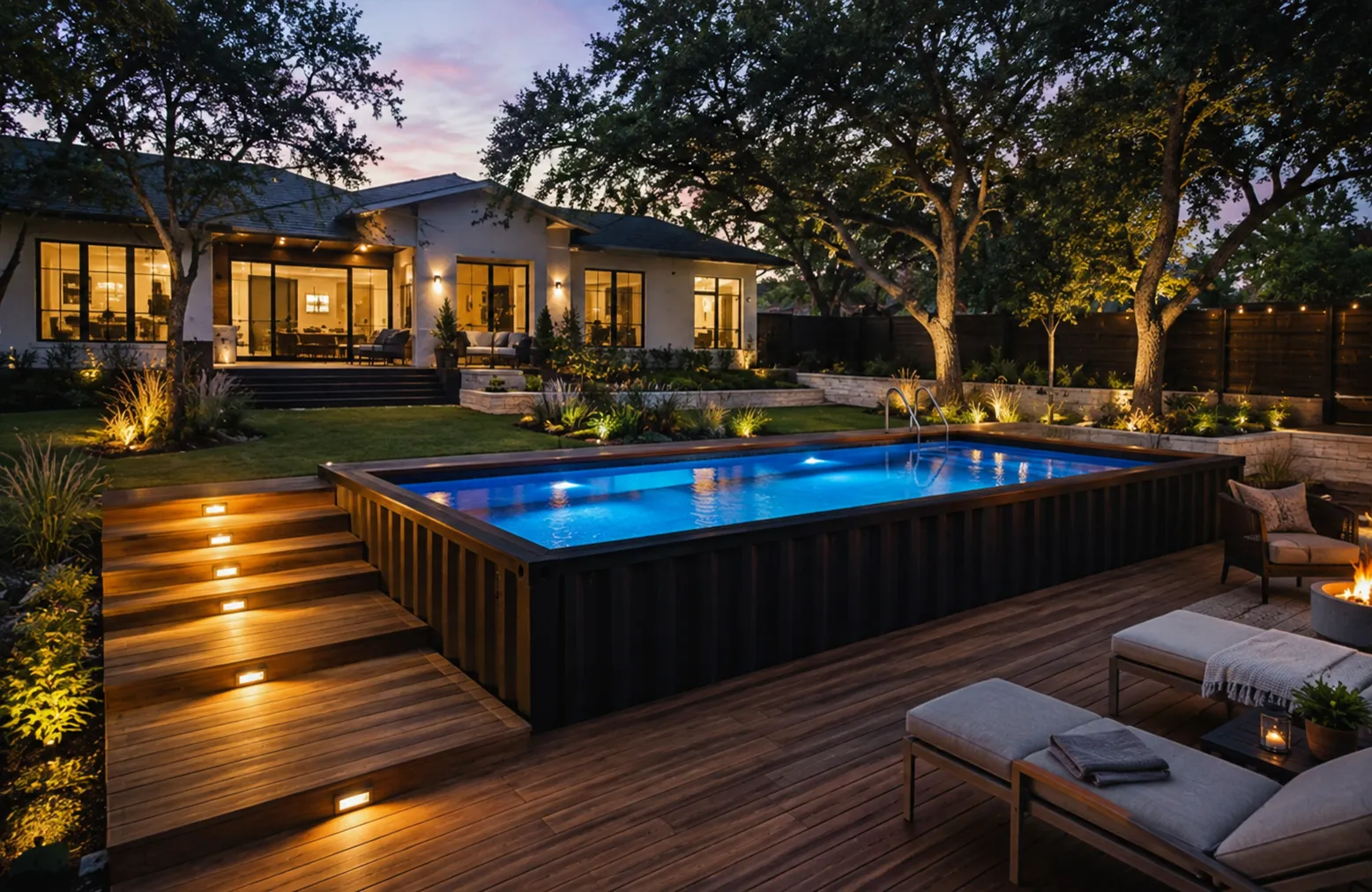
Decking, patios, landscaping, lighting, pergolas, and fencing.
Six proven footprints, each ready to be designed around your property. Custom options are available through the project request.
Custom builds
Odd lot, tight access, an unusual footprint or a pool with a spa, window or deck built in — send us the property and we'll design around it.
Get custom quoteOur process
We start with your property, ideas and budget. We evaluate placement, access, grade, utilities and site conditions, then design the pool and overall direction for the space.
Your pool is built to spec — including the steel structure, stairs, benches, spa, viewing windows, finishes, plumbing and equipment based on your configuration.
While the pool is being built, we prepare your property for installation — excavation, grading, drainage, foundation, utility runs and crane access.
The pool is transported to your property, craned into position, set and leveled, then connected to plumbing, electrical and equipment before startup and commissioning.
We finish the space around the pool with decking, patios, landscaping, lighting, pergolas, fencing and other outdoor upgrades based on your design.
Yes. We don't just clean out an old container and fill it with water — the shell is a purpose-built, marine-grade steel structure that's reinforced, coated, and pressure-tested to hold water permanently as a swimming pool. It's engineered to the same structural standards you'd expect from any code-compliant residential pool.
Most installs run two to four weeks from delivery to first swim once the site is prepped — a fraction of the three to six months a gunite pool typically takes. The container arrives largely finished from the factory, so on-site work is mostly site prep, crane placement, plumbing and electrical hookups, and decking.
In almost every Texas jurisdiction, yes — a container pool is treated like any other swimming pool for permitting and fencing purposes. We handle the permit paperwork as part of the project and will flag any HOA requirements during the design phase, before we ever schedule a crane.
Usually. The container arrives as one finished unit and is set into place by crane, so we do check gate widths, overhead lines, and yard access early in the process. On tight urban lots we plan the crane pick and route in advance; it's rarely a dealbreaker, but it does shape the install day.
Not if the coatings are kept up — that's the honest answer. Every shell is blasted or cleaned, primed and coated before it leaves the shop, and a coated, maintained shell holds up for decades. A scratch left open for a year doesn't. We show you exactly what to check each season, and we can handle touch-ups for you.
Yes. We insulate the shell during the build, which helps hold heat and reduces energy costs if you add a heater. Heaters, saltwater systems, and swim jets are all standard options we can spec into the build.
We design the plumbing and equipment for Texas winters, including freeze-protection measures on the circulation lines and equipment pad. Most of our clients run their container pool comfortably through three seasons and can extend that further with a heater.
Either works well in a steel-shell pool once it's properly coated and sealed. Saltwater systems are lower-maintenance day to day; chlorine systems are simpler and cheaper up front. We'll walk you through the trade-offs for your household during design.
That's one of its biggest advantages over a poured pool. Because the shell is a discrete steel structure rather than a hole in the ground, it can be disconnected, lifted, and relocated if you move or want to reposition it in the yard — something that's simply not possible with gunite.
Standard container depths run around 4 to 6 feet depending on the model and whether it's above-ground, partially recessed, or fully in-ground. We can also step the depth within a longer container for a shallow end and a deeper swim end.
Your property. Your possibilities.
Tell us what you’re thinking and we’ll start by looking at your property.
Start planning